
Why WhatsApp is the channel that matters most in the Gulf
In a lot of the world, email is the backbone of direct marketing and WhatsApp is an afterthought. In the UAE the order is reversed. Almost everyone here lives inside WhatsApp, they check it constantly, and they treat it as the normal way to talk to a business, not an intrusion. Ask a Dubai customer to fill in a contact form and many will hesitate. Give them a WhatsApp button and they will message you before they have finished reading the page.
That behaviour is the whole reason WhatsApp marketing works so well here. The channel already has the attention that email and phone calls have to fight for. People reply fast, they feel comfortable asking questions, and because a chat feels personal, they trust it in a way they do not trust a mass email. For a business that sells anything requiring a conversation, and in Dubai that is most businesses, meeting customers on WhatsApp is not a nice extra. It is where the market already is.
The catch is that this power comes from the channel feeling personal and permission-based, and the moment a business abuses that, WhatsApp acts fast. Send unwanted messages and people report you, and enough reports get your number restricted or banned. So the goal is never to shout louder on WhatsApp. It is to be the business people actually want to hear from there, and to reach them in a way the platform rewards rather than punishes.
The Business App and the Business Platform are not the same thing
This is the distinction that decides whether WhatsApp can be a real marketing channel for you or stays a glorified personal chat, and almost nobody explains it. The free WhatsApp Business App is fine for a tiny shop answering a handful of chats a day from one phone. It does not scale, it cannot broadcast to large audiences safely, and it has no proper automation or CRM connection. Try to run real marketing through it and you will hit its limits fast, usually with a blocked number.
The WhatsApp Business Platform, often called the API, is the grown-up version built for businesses that want to reach people at scale. It allows approved broadcasts to opted-in audiences, real automation and chatbots, connection to your CRM and other tools, multiple team members answering from the same number, and the verified green tick that tells customers you are the real business. This is what we set you up on, because it is the only version that lets WhatsApp become a channel you can actually grow without living in fear of a ban.
Broadcasts, template messages, and the rules that keep you safe
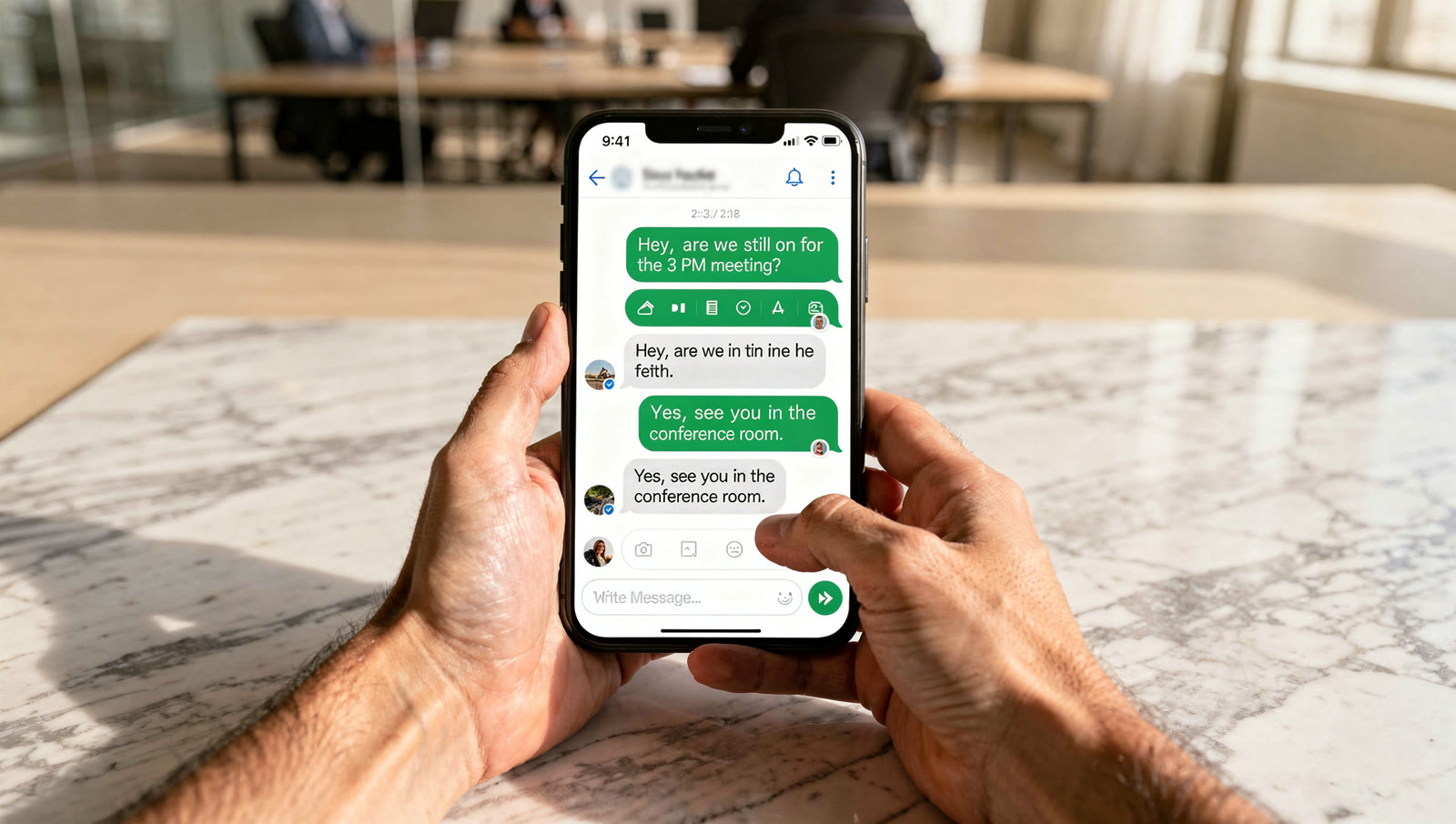
A broadcast is how you reach many chats at once: an offer, a launch, a reminder, sent to everyone who opted in. But WhatsApp does not let you send whatever you like whenever you like, and that restriction is a feature, not a bug, because it is what keeps the channel free of spam and worth people's attention. To message someone outside an active conversation, you use a template message, and templates have to be approved by WhatsApp before they go out.
There is also a 24-hour window that governs everything. Once a customer messages you, you can reply freely for twenty-four hours. After that, to reach them again you need an approved template and, in most cases, their opt-in. It sounds restrictive, and it protects you, because a channel where businesses cannot spam is a channel customers keep trusting. We work inside these rules by design: we build genuine opt-ins, we get templates approved, and we time messages to land inside the window whenever possible. The businesses that ignore all this get short-term reach and a long-term ban. The ones that respect it get a channel that lasts for years.
Automation that answers before a customer can lose interest
In WhatsApp, speed is everything. A customer who messages and waits an hour has usually already messaged a competitor too, and the one who replies first often wins. The trouble is that no team can watch the chats around the clock, and in a market that shops at all hours, plenty of enquiries land at midnight. Automation is how you answer anyway.
We create the layers that respond instantly: a greeting that acknowledges every new chat, auto-replies to the questions you get asked constantly, an interactive menu that points people to the right place, and a qualifying flow that gathers the basics before a human ever steps in. Done well, a customer messaging at two in the morning gets a useful answer immediately, feels looked after, and is still warm when your team picks it up in the morning. The automation does not replace the human touch that closes the sale. It makes sure the customer is still there for it.
On WhatsApp the business that replies first usually wins. Automation is how you reply first even when nobody is awake.
Click-to-WhatsApp ads: the format built for how Dubai buys
Most ads send a click to a landing page and hope the visitor fills in a form. Click-to-WhatsApp ads do something better suited to this market: they open a conversation. Someone sees your ad on Instagram or Facebook, taps it, and instead of landing on a page they are in a chat with your business, mid-conversation, exactly where a Dubai customer is most comfortable. The drop-off that kills so many landing pages simply does not happen, because there is no form to abandon.
For a huge range of Dubai businesses this is the single highest-converting paid format available, and it pairs the reach of Meta ads with the intimacy of WhatsApp. We run it end to end: the ad creative and targeting, the automated flow that greets and qualifies the chat the moment it opens, and the handoff to your team for the ones ready to buy. If you already run paid social, this connects it straight to the channel where your customers actually close, and our Meta ads and social media services are built to work alongside it.
Keeping your number safe: opt-in, consent, and the ban risk
Nothing matters more on WhatsApp than protecting your number, because a banned number takes your whole channel and your customer conversations with it. Bans come from one thing above all: messaging people who did not agree to hear from you. WhatsApp leans heavily on user reports, and it does not take many before a number is restricted. So the entire strategy has to be built on genuine consent.
We set up real opt-ins at every point a customer engages, so the people you broadcast to actually chose to be there. We keep messages relevant and paced so nobody feels spammed into reporting you. And we stay inside the template rules and the 24-hour window rather than trying to slip around them. This is the unglamorous discipline that separates a WhatsApp channel that grows for years from one that gets a business a few weeks of reach and then a dead number. The rules are not the obstacle. They are what makes the channel worth having, and respecting them is what keeps you in the game.
WhatsApp, email, and SMS each do a different job
The smartest Gulf businesses do not choose between these channels, they use each for what it does best. WhatsApp is where the conversation and the closing happen, the fast, personal back-and-forth that turns interest into a sale. Email carries the depth: the newsletter, the detailed offer, the story that needs room to breathe. SMS is the blunt instrument for genuine urgency, a time-critical reminder that has to be seen now.
Used together they cover the whole journey without annoying anyone. A lead might arrive through a click-to-WhatsApp ad, get nurtured over email between purchases, and receive an SMS only for the appointment reminder that truly cannot be missed. The art is in the coordination, making sure the customer hears from you on the right channel at the right moment rather than getting the same message three ways. We build email and WhatsApp to work as one system, so each one strengthens the other instead of competing for the customer's patience.
What WhatsApp works best for, industry by industry
WhatsApp earns its keep differently depending on what you sell, and knowing which use case fits you shapes the whole setup. For a clinic or a salon it is booking and reminders: filling the calendar, cutting no-shows with a friendly nudge, and answering the questions people are shy to ask on a call. For a property agency it is speed and qualification, getting a live conversation going with a serious enquiry before a competitor does, and sending listings straight into the chat.
For an online store it is recovering carts, confirming orders, and turning a support chat into a second sale. For a restaurant it is reservations, menus, and offers to a list of regulars who actually want them. The mechanics of the platform are the same across all of these, but the flows, the templates, and the automations are shaped around the specific job WhatsApp is doing for your business. We build for your use case rather than dropping a generic setup on top of it, because a booking flow and a cart-recovery flow have almost nothing in common except the app they run on.
The mistakes that get Dubai numbers banned
Most WhatsApp marketing that goes wrong goes wrong the same handful of ways. The worst is buying a list of numbers and blasting them, which is a fast route to a ban and, in many cases, a broken law. Close behind is messaging from a personal number at scale, which has none of the protections or capabilities of the official platform and gets flagged quickly. Then there is ignoring the template rules and the 24-hour window, sending too often until people mute or report you, and leaving chats unanswered for hours so the customer gives up.
None of these are hard to avoid once you understand how the channel works, and most businesses only learn them the expensive way. Setting WhatsApp up correctly from the start, on the official platform, with real opt-ins and sensible pacing, is far cheaper than recovering a banned number and rebuilding a customer base you lost access to overnight. Getting this right is not about doing anything clever. It is about not doing the obvious things wrong.
How a good WhatsApp conversation actually flows
A WhatsApp chat that converts follows a shape, and building that shape into your automation is most of the work. It opens with an instant greeting that acknowledges the person and sets a tone, because a chat that sits unanswered for even a few minutes loses momentum. From there it gathers the basics: what the customer wants, roughly when, and enough detail to route them, all through friendly questions and tappable buttons rather than a wall of text demanding information.
Then it answers the real question fast, because people come to WhatsApp for a quick, direct response, not a brochure. If the enquiry is ready to buy, the chat moves smoothly toward the booking or the purchase, with the payment or calendar link right there in the conversation. If it is not ready yet, the flow captures the lead and hands a warm, qualified chat to a human at the right moment. And it does not end at the sale: a good flow follows up, confirms, and keeps the door open for the next one. We map this whole journey for your business and build the automation around it, so every chat feels handled rather than processed.
WhatsApp is a retention channel, not just an acquisition one
Most businesses think of WhatsApp as a way to win new customers, and it is, but its quieter strength is keeping the ones you already have. A customer who has bought from you once and has your number in their chat list is a customer you can reach again with almost no friction. An order confirmation becomes a chance to suggest the next thing. An appointment reminder cuts a no-show and shows you care. A simple check-in months later brings a lapsed customer back before they have forgotten you.
This matters enormously for the economics of a Dubai business, because winning a new customer costs far more than keeping an existing one, and WhatsApp is the cheapest, most personal way to keep them. We wire retention into the setup from the start: post-purchase follow-ups, reorder nudges timed to how your product is actually used, loyalty messages to your best customers, and win-back conversations for the ones who have gone quiet. Paired with the acquisition side, it turns WhatsApp from a lead machine into a full relationship channel, which is where its real long-term value sits. It is the same logic that makes an email list valuable, applied to the channel Dubai actually opens.
Measuring WhatsApp by chats, leads, and sales
It is easy to measure the wrong thing on WhatsApp. Messages sent, delivery rates, and read receipts all look like progress and tell you almost nothing about whether the channel makes money. The numbers that matter run down a simple funnel: how many conversations started, how many of those became qualified leads, and how many of those turned into actual sales. Track that and every decision about the channel gets clearer, because you can see exactly where chats are being won and lost.
We set up the tracking so WhatsApp is not a black box. You can see that click-to-WhatsApp ads produced this many chats at this cost, that the automation qualified this share of them, and that your team closed this much revenue from the rest. That clarity is what lets the channel improve month after month instead of drifting on a feeling that WhatsApp is somehow working. Report in chats, leads, and sales, and WhatsApp stops being a busy inbox and becomes a channel you can actually steer toward more revenue.
What the monthly fee covers
WhatsApp marketing pricing has two parts, and we are upfront about both. There is our monthly fee for the work, from AED 2,500 depending on how much automation and how many campaigns you need, and there is a separate platform cost that WhatsApp charges per conversation, which is usually modest and scales with how much you send. We show you the expected platform cost before you start, so there are no surprises on the bill.
Inside our fee sits the setup and migration, the automation and chatbot builds, the broadcast and template management, the click-to-WhatsApp ad work, the CRM connection, and the monthly reporting. Everything we build, including your official account, your automations, and your chat history, stays in your name. You are not renting a channel you lose access to the day you leave. You are building one your business owns and keeps.
Trust: the green tick and a profile people believe
On WhatsApp, trust is the currency, because a customer is letting a business into the same app they use for their family and friends. Anything that looks off, an unknown number, an empty profile, a message that reads like spam, and they are gone or, worse, they report you. So a good part of WhatsApp marketing is simply looking like the real, established business you are, and being easy to verify at a glance.
That starts with a complete, professional business profile: your name, logo, description, address, and hours, all filled in properly so a customer who taps through sees a legitimate company rather than a mystery number. Where your business qualifies, the green verified tick goes further, confirming to everyone that you are the official account and not an impersonator, which matters a great deal in a market with its share of scams. We set the profile up right and handle the verification application as part of onboarding. It is a small piece of the work with an outsized effect, because on a channel this personal, the first thing a customer decides is whether they trust you, and everything else depends on that answer.
What the first thirty days look like
A WhatsApp programme does not need months before it does anything, and it should not. In the first week we get you onto the official platform, set up your business profile and catalog, apply for verification where you are eligible, and connect the account to your CRM. This is the foundation, and getting off a personal number is the single most important step, because everything that follows depends on it.
In the second and third weeks we build the automation: the greeting, the auto-replies, the menu, and the qualifying flow, plus your first approved templates for broadcasts. By the end of the first month the channel is live and working, click-to-WhatsApp ads are bringing conversations in, and the automation is answering them instantly, day and night. From there it is a matter of growing the opted-in audience and refining what converts. You are not waiting a quarter to see whether WhatsApp works. You are having real, qualified conversations within weeks, on a channel built to last.
How to choose a WhatsApp marketing agency in Dubai
A few questions tell you quickly whether an agency knows what it is doing. Ask whether they set you up on the official WhatsApp Business Platform or just message from a phone, because only one of those is a real, scalable channel. Ask how they handle opt-in and the template rules, and if they wave the question away, walk, because that carelessness is exactly what gets a number banned. Ask who owns the account and the chat data when the work ends, and get it in writing.
Then ask how they measure success. If they talk about messages sent, that is a warning sign. The numbers that matter are chats started, leads captured, and sales closed, and a good agency reports them plainly. We built Markamo to answer all of it the same way every time: yes, official platform; yes, proper opt-in and compliance; yes, you own everything; and we report in sales, not sends. The free WhatsApp setup audit is where we show you what a safe, high-converting channel would look like for your business.