
Why influencer marketing works so well in the UAE
Few markets take creators as seriously as this one. In Dubai, people find their next restaurant, clinic, gym, salon, or weekend plan through the accounts they follow, and they trust a creator's word in a way they simply do not trust a brand talking about itself. A recommendation from someone whose taste they have followed for years lands as advice from a friend, not a sales pitch, and that trust is the whole reason the channel is so powerful here.
It also fits how the city works. Dubai is image-conscious, highly social, and full of people discovering a place they have only just moved to, which makes the creators who map that world genuinely useful to their audiences. A brand that shows up through the right creator borrows that trust and that discovery, appearing not as an interruption but as part of the feed people actually want to scroll. Done well, it is the closest thing marketing has to genuine word of mouth, at scale.
But that same power is exactly why the market is so easy to waste money in. Trust is the asset, and trust cannot be faked, yet a huge share of the accounts pitching brands have inflated their numbers, bought their followers, or built an audience that has nothing to do with the UAE. The opportunity is real and large. So is the risk of paying a lot for reach that was never real in the first place, which is why the vetting matters more than anything else.
Micro, macro, and mega: which creators actually move the needle
There is a reflex to chase the biggest names, and it is usually the wrong instinct. The creators with the most followers have the widest reach and the lowest trust per follower, because an audience of millions is broad and passive. The creators with smaller, tighter audiences, the micro and mid-tier, often drive far more action per dirham, because their followers feel a real connection and take their recommendations seriously. For most Dubai brands, a well-chosen group of these smaller voices outperforms one expensive big name.
That does not mean the big names never make sense. A mega creator can be exactly right for a launch that needs mass awareness fast, or for the credibility of being associated with a recognisable face. The point is to match the creator tier to the job. Awareness at scale, and the bigger accounts earn their place. Trust and conversion, and the smaller, closely followed creators usually win. We build the mix deliberately around what you are trying to achieve, rather than defaulting to whoever has the most followers, because follower count is the one number that correlates least with results.
The fake-follower problem, and how we vet creators
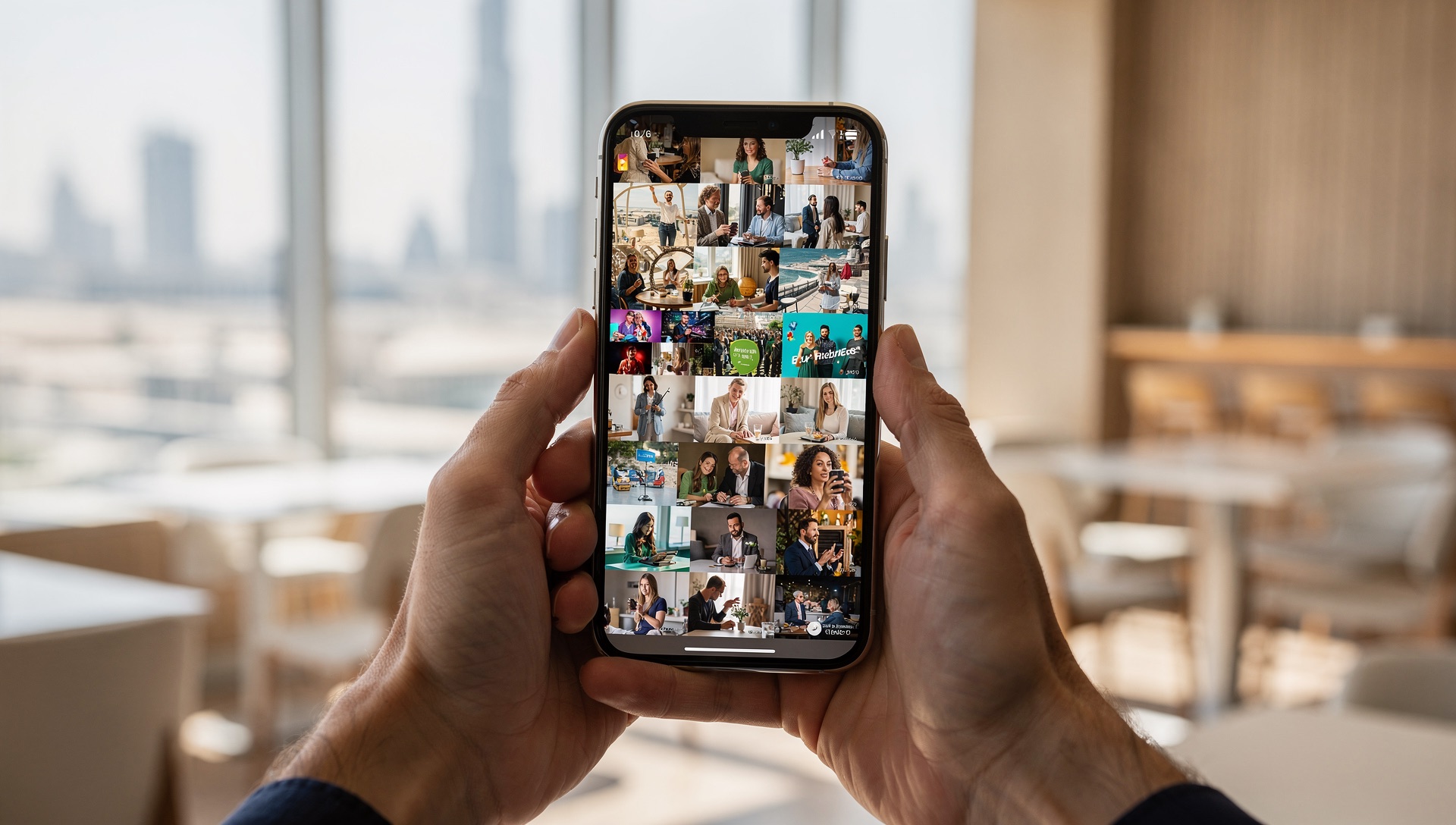
This is the single biggest way brands lose money on influencers, and it is invisible unless you know where to look. Plenty of accounts have bought followers, inflated their engagement with pods and bots, or built an audience that lives in another country entirely. On the surface they look impressive: big numbers, lots of likes. Pay them, and your product reaches an audience of ghosts and people who will never walk into your Dubai business. The report looks fine and the sales never come.
Vetting is how we stop that, and it is the part of the work we take most seriously. We look past the follower count at the shape of the engagement, whether it is real and consistent or spiky and hollow. We check where the audience actually is, because a creator with a million followers in another market is worthless to a Dubai clinic. We look at who the audience is, whether it matches your customer, and whether the comments are from real people or a wall of bot emoji. Only creators who pass go into a campaign. It is unglamorous detective work, and it is the difference between influencer spend that reaches real potential customers and influencer spend that quietly evaporates.
Briefs and contracts: getting what you actually paid for
Two documents decide whether an influencer campaign works, and most brands treat both as afterthoughts. The first is the brief. A good brief gives the creator enough freedom to sound like themselves, because that authenticity is what their audience responds to, while making sure the content carries your real message and points somewhere useful. The difference between a post that drives enquiries and one that just exists is almost always in the brief: whether it told the creator what the audience should feel, understand, and do.
The second is the contract. This is where you protect the money. It locks down exactly what you are getting, when, how many posts and stories, how long they stay up, and crucially the usage rights, so you can reuse the content in your own ads and on your site. It sets the disclosure requirements and it holds the creator to what was agreed. Without it, you are relying on goodwill in a market not short of inflated invoices and quiet no-shows. We handle both properly, because the campaign lives or dies on the brief, and the budget is protected by the contract.
Follower count is the number that matters least. Real engagement, a real local audience, and a proper brief are what turn a creator into customers.
Disclosure and the licensing rules that keep you safe
The UAE takes influencer marketing seriously in law, and a brand that ignores that is taking a real risk. Creators who do paid promotion here are required to hold the proper media licence, and paid content has to be disclosed clearly rather than dressed up as a genuine, unpaid opinion. This is not a technicality. Working with an unlicensed creator, or running an ad that pretends not to be one, can bring fines and the kind of public embarrassment that undoes whatever the campaign was meant to achieve.
We keep every campaign on the right side of this from the start. We work only with properly licensed creators, we make sure paid partnerships are disclosed the way the rules require, and we structure the whole thing so your brand is never the one left exposed. It is a part of the job that a lot of agencies wave away until something goes wrong, and getting it right is not just about avoiding trouble. Honest disclosure actually performs better over time, because audiences trust brands and creators who are straight with them and quietly resent the ones who try to sneak an ad past them.

Whitelisting: making one great post work ten times harder
The biggest missed opportunity in influencer marketing is treating a creator's post as a one-time event. It goes live, the creator's followers see it, and then it fades. Whitelisting changes that. With the creator's permission, we turn their best content into paid ads run from their handle and yours, so the post reaches far beyond the people who already follow them, targeted at exactly the audience you want to reach.
This is where influencer marketing and paid social meet, and it is one of the highest-return things you can do with creator content. A single collaboration you already paid for can now be shown to tens of thousands of the right people, carrying all the trust of coming from a real person rather than a brand account. We run this through our meta ads work, so the creator content and the paid targeting are handled by one team. Instead of buying a post that lives for a day, you build an asset that keeps working for weeks, which changes the maths of the whole campaign.
UGC: the quiet workhorse behind the big posts
Not all creator value comes from the follower count. Some of the most useful output of an influencer programme is the content itself: real people using your product, filmed in a way that feels genuine rather than staged. This user-generated style content is some of the highest-converting material there is, precisely because it does not look like an advert, and it works far beyond the original post.
When we secure the rights to it, that content becomes fuel for everything else you do. It runs as paid ads, it lives on your product pages, it fills your own social feed, and it does all of that with a credibility that polished brand content struggles to match. A creator campaign that ends with a stack of owned, authentic content you can reuse is worth far more than one that ends with a few posts that vanish from the feed. We build the rights to reuse into every deal, so you keep the value long after the campaign is over.
The platform mix: Instagram, TikTok, and Snapchat in the Gulf
Each platform does a different job in this market, and the right creator on the wrong platform is a wasted fee. Instagram remains the backbone of influencer marketing in Dubai, strong for lifestyle, beauty, food, travel, and anything visual, with a mix of feed posts, stories, and reels that suit both awareness and consideration. TikTok has grown enormously and reaches a younger, highly engaged audience with content that can travel far beyond the creator's own following when it catches. Snapchat still holds a genuinely important place in the Gulf that outsiders often underestimate, with deep reach among local and regional audiences.
The job is to match the platform to the audience you actually want and the story you are telling, rather than being everywhere for its own sake. A beauty brand and a fintech app and a family restaurant belong in very different places, on very different creators, saying very different things. We build the platform mix around your customer, not around whichever app is trending this month, because reach on the wrong platform is just an expensive way to talk to the wrong people.
How we measure influencer ROI
The default way to report influencer marketing is with likes, views, and follower growth, and those numbers are almost useless for deciding whether the money worked. They tell you a post was seen, not that it sold anything. Real measurement follows the campaign down to what it actually produced, and that takes setting it up properly from the start rather than trying to guess afterwards.
We give each creator a unique discount code and a tracked link, so a sale can be traced back to the person who drove it. We watch the traffic, the enquiries, and the revenue that follow each collaboration, not just the surface engagement. That turns influencer marketing from a leap of faith into a channel you can actually manage: you can see which creators earned their fee and which did not, double down on the ones who convert, and stop paying the ones who only ever brought likes. Report in sales and influencer spend stops being a gamble and becomes a decision you can make on evidence.
The mistakes that waste influencer budgets
Most influencer money is lost the same few ways. The biggest is picking creators on follower count alone and skipping the vetting, so the budget flows to inflated accounts and foreign audiences. Close behind is a weak or missing brief, which leaves the creator to guess and produces content that entertains but never sells. Then there is ignoring usage rights, so a great piece of content can only ever be the one post; forgetting compliance until a disclosure problem surfaces; and measuring success by likes, which hides whether anything actually worked.
None of these are hard to avoid once you know they are there, and almost every brand learns them the expensive way, one wasted campaign at a time. Doing the unglamorous parts properly, the vetting, the brief, the contract, the tracking, is what separates influencer marketing that builds a business from influencer marketing that just buys a moment of attention. The creative gets the credit, but the results come from the parts nobody posts about.
What the monthly fee covers
Influencer marketing has two costs, and we are clear about both. There is the creators' own fees, which is the media budget that goes to the talent, and there is our management fee for the work around it, from AED 3,500 depending on the size and complexity of the programme. We keep the two separate and transparent, so you always know how much of your spend is reaching creators and how much is paying for the strategy, vetting, and management that makes it work.
Inside our fee sits the sourcing and vetting, the strategy and creator mix, the briefs, the negotiation and contracts, the compliance, the whitelisting and amplification, and the tracking and reporting. And the content rights we secure, the tracking we set up, and the relationships we build all stay with your business. You are not renting a channel you lose the moment you leave. You are building a roster of proven creators and a library of owned content that keeps its value.
Gifting, paid partnerships, and where each fits
Not every collaboration needs a cheque, and knowing when to pay and when to gift saves real money. Gifting, sending a creator your product for free in the hope they post, works when the product is genuinely desirable and the creator is a real fit, and it can seed a lot of authentic content at low cost. The catch is that it buys no guarantee: the creator owes you nothing, may not post, and you have little say over what they show. It is a numbers game that rewards a good product and the right list.
Paid partnerships are the opposite: you agree exactly what you get, when, and with what rights, and you can brief and track it properly. They cost more and they deliver certainty, which is what you want for a launch, a specific message, or content you need to reuse. Most strong programmes use both, gifting to seed authentic mentions and discover which creators genuinely love the product, then paying the ones who prove themselves to do the deliberate, trackable work. We build the right balance for your budget and product rather than defaulting to one or the other, because paying for what you could have gifted wastes money, and gifting what needed a contract wastes the opportunity.
Ambassadors beat one-off posts
Most brands treat influencer marketing as a series of one-night stands: pay a creator, get a post, move on to the next one. It works, but it leaves most of the value on the table. The audience sees a creator mention a brand once and reads it as exactly that, a paid mention. The same creator championing the same brand across months reads as genuine loyalty, and that repetition is what turns a single post into a real association in the audience's mind.
So the higher-return play is often to build ongoing relationships with a smaller group of proven creators rather than churning through a new list every campaign. An ambassador who genuinely uses and likes your product, mentioned naturally and repeatedly, is far more persuasive than a stranger reading a brief once. It also gets cheaper and smoother over time, because the creator already knows your brand and their audience already associates the two. We identify the creators worth building with, the ones who actually convert and genuinely fit, and turn them from a transaction into a relationship that compounds. It is the same logic that makes owning an email list valuable, applied to trust rather than addresses.
Influencer marketing looks different for different businesses
The right influencer strategy depends heavily on what you sell, and a plan that works for a restaurant can be useless for a clinic. For a restaurant or a cafe, it is about food creators, the visit, and the immediate buzz of a place people want to be seen at, measured in bookings and footfall over the following weeks. For a clinic or an aesthetics business, trust and discretion matter more, so it leans on credible creators and honest before-and-after storytelling, and the compliance around health claims has to be handled with real care.
For an online store, the goal is trackable sales, so codes, links, and reusable content do the heavy lifting, and the creator content often earns more as reusable ads than as the original posts. For a property developer or agency, it is about aspiration and reach among the right income bracket, a very different creator profile again. The platform mechanics stay the same across all of them, but the creators, the message, the metrics, and the rules change completely. We shape the strategy around your specific business rather than running the same playbook regardless, because in influencer marketing the wrong creator is not just less effective, it is money handed to the wrong audience entirely.
How to choose an influencer marketing agency in Dubai
A few questions separate an agency that will grow your brand from one that will spend your budget on pretty numbers. Ask how they vet creators, and listen for whether they talk about real engagement and audience checks or just follower counts, because that answer tells you everything. Ask how they handle UAE licensing and disclosure, and if they look uncertain, walk, because that carelessness is your brand's risk to carry. Ask who owns the creator content when the campaign ends, and get it in writing.
Then ask how they measure success. If the answer is reach and likes, that is a warning sign. The numbers that matter are the sales, the enquiries, and the tracked results each creator produced, and a good agency reports them plainly. We built Markamo to answer all of it the same way every time: yes, we vet properly; yes, we keep you compliant; yes, you own the content; and we report in sales, not likes. The free influencer plan is where we show you which creators are genuinely worth your budget and what a campaign built to convert would look like for your brand.